
 By Nexora Magazine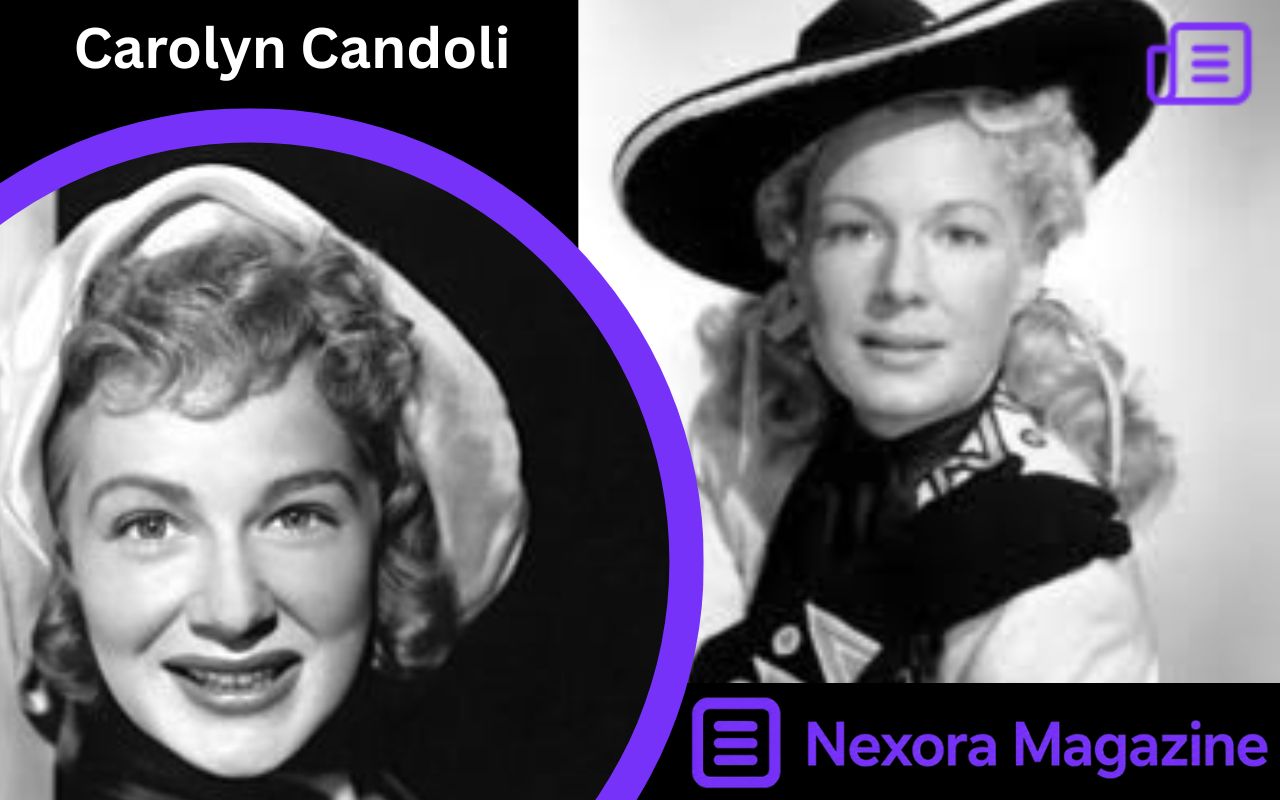
In the rich tapestry of American entertainment, few figures occupy as unique a space as Carolyn Candoli. Though not widely documented in public media, Carolyn’s life is intrinsically linked to two towering figures of 20th-century American culture: her father, Pete Candoli, a virtuoso jazz trumpeter whose career spanned decades, and her mother, Betty Hutton, one of Hollywood’s most iconic musical film stars. Born into a household where music, film, and artistic ambition intersected, Carolyn’s story is inseparable from the cultural legacies of her parents, offering a unique window into the worlds of mid-century jazz and Hollywood.
Although Carolyn herself did not pursue a public career, her identity and heritage are deeply connected to the artistic, social, and historical contexts of her family. Understanding Carolyn’s life requires examining the complex, fascinating lives of Pete Candoli and Betty Hutton and the environments they created — from jazz clubs to Hollywood soundstages, and from recording studios to film sets.
Early Life and Family Background
Carolyn Candoli was born in 1962, a period marked by the peak of her parents’ influence in their respective fields. Her father, Pete Candoli, had already established himself as a leading figure in the jazz world, known for his exceptional skill on the trumpet and his contributions to both live performance and studio recording. Her mother, Betty Hutton, was one of Hollywood’s brightest musical stars, celebrated for her energy, charisma, and groundbreaking roles in films such as Annie Get Your Gun.
Being born into such a family meant that Carolyn’s early years were steeped in art, creativity, and the cultural currents of the time. While specific details of her childhood remain private, it is likely that she experienced firsthand the worlds of jazz ensembles, recording sessions, and the theatricality of Hollywood film productions. This unique upbringing positioned Carolyn within a lineage of artistic excellence and cultural influence, providing her with a rich familial and historical heritage.
The Candoli Family and the Jazz Legacy
Pete Candoli, Carolyn’s father, was a central figure in American jazz history. Born Walter Joseph Candoli in Mishawaka, Indiana, in 1923, he displayed musical talent from a young age, ultimately pursuing a career that spanned over six decades. He played with some of the most influential big bands of the era, including those led by Woody Herman, Stan Kenton, and Les Brown. Known for his mastery of the high register on the trumpet, he earned the nickname “Superman” for his ability to perform solos that showcased both technical skill and emotional depth.
Candoli’s move to Los Angeles in the 1950s brought him into the world of studio recording and television, where his versatility made him a sought-after musician. He performed on numerous film and television soundtracks, collaborated with iconic artists, and helped shape the sound of West Coast jazz. Pete’s work extended beyond performance to include arranging and conducting, influencing the careers of other musicians and contributing to the development of American jazz as both an art form and a commercial enterprise.
Carolyn’s exposure to this musical environment would have been formative, offering her a close view of the discipline, creativity, and collaborative spirit that defined jazz culture. The presence of other jazz luminaries in her household and social circles would have further enriched her understanding of music and performance, situating her within a living history of American jazz.
Betty Hutton: Hollywood Star and Cultural Icon
Carolyn’s mother, Betty Hutton, brought an entirely different cultural influence into her life. Born Elizabeth June Thornburg in 1921, Hutton became one of Hollywood’s most energetic and memorable musical stars. She gained fame through her distinctive singing style, vibrant screen presence, and exceptional comedic timing. Her performance as Annie Oakley in Annie Get Your Gun remains an iconic moment in cinematic history, showcasing her ability to combine acting, singing, and dancing with infectious energy.
Hutton’s career was emblematic of Hollywood’s golden age, a period when musicals dominated film and performers needed to combine multiple talents. She worked extensively with Warner Bros., starred in a series of successful films, and became one of the highest-paid actresses of her era. Beyond film, Hutton also had a successful recording career, with popular songs that resonated across the United States.
Despite her professional success, Hutton’s personal life was fraught with challenges, including struggles with addiction and mental health. Her marriage to Pete Candoli brought together two powerful artistic legacies but was marked by difficulties that reflected the pressures and complexities of life in the entertainment industry. These circumstances inevitably shaped Carolyn’s early experiences, placing her in the midst of both glamour and turmoil.
Carolyn’s Childhood: Between Music and Cinema
Growing up, Carolyn was uniquely positioned between two worlds. The influence of her father’s jazz career meant she was exposed to improvisation, rhythm, and musical creativity at the highest level. Studio sessions, rehearsals, and performances provided a living education in musical artistry, offering insights into both the technical and expressive dimensions of music.
Simultaneously, her mother’s career in Hollywood introduced Carolyn to the world of film, stagecraft, and performance. The process of filmmaking, from rehearsals to recording songs, and from costume fittings to live performances, would have provided her with an intimate view of the artistic, logistical, and emotional demands of cinema. This dual exposure created a unique environment that merged the discipline of professional music with the spectacle of Hollywood, shaping her understanding of creativity and performance.
The intersection of these two worlds meant that Carolyn’s upbringing was not just a family matter but also a cultural experience. She witnessed firsthand the ways in which music and film could influence society, reflect cultural trends, and leave enduring artistic legacies.
Family Challenges and Personal Struggles
Despite the advantages of her cultural heritage, Carolyn’s early life was marked by challenges. Betty Hutton’s personal struggles, including issues with addiction and mental health, led to periods of instability within the household. At certain points, Hutton lost custody of Carolyn due to these difficulties, reflecting the complex realities of life behind the glamorous façade of Hollywood.
The divorce of her parents in 1967 further complicated Carolyn’s childhood. Navigating the emotional aftermath of separation, coupled with the pressures of being the child of public figures, likely required resilience and adaptation. These experiences, while challenging, also positioned Carolyn to witness and understand the human dimensions of fame and artistry — the intersection of personal vulnerability with public persona.
Cultural Context: Jazz, Hollywood, and American Identity
Carolyn Candoli’s life cannot be fully understood without considering the broader cultural and historical context of her family. The jazz world of her father was a cornerstone of American music, influencing subsequent genres such as R&B, rock, and pop. Pete Candoli’s contributions to big bands, studio recordings, and television performances helped define the sound of mid-century America.
Similarly, Betty Hutton’s work in Hollywood musicals contributed to the cultural imagination of post-war America. Her films embodied optimism, entertainment, and artistic excellence, shaping public perceptions of American identity and creativity. The combination of these influences created a unique cultural environment in which Carolyn’s early life was steeped, connecting her to significant artistic movements and historical trends.
The Legacy of the Candoli Family
While Carolyn Candoli herself did not pursue a public career, her existence and heritage are inseparable from the legacies of her parents. She represents the convergence of two major cultural narratives: the evolution of jazz music through her father and the golden age of Hollywood musicals through her mother. Carolyn’s life highlights the ways in which artistic talent, cultural influence, and family heritage intersect, even when not directly visible to the public eye.
Her story underscores the broader truth that cultural legacies extend beyond individual fame. Artistic influence is often transmitted through family, community, and heritage, shaping the next generation’s understanding of creativity, discipline, and cultural identity.
Read More: Marjorie Gortner: Life, Family, and Historical Context
Conclusion: Carolyn Candoli and Her Cultural Inheritance
Carolyn Candoli may not be a household name, but her life is deeply intertwined with the history of American music and cinema. As the daughter of Pete Candoli, a jazz virtuoso whose trumpet defined the sound of an era, and Betty Hutton, a Hollywood star whose energy and talent captivated audiences, Carolyn embodies a unique cultural inheritance.
Her story serves as a reminder that the impact of artists extends beyond their own careers. Through Carolyn, the legacies of jazz and Hollywood musicals converge, illustrating how artistic influence can span generations. While she may remain largely private, Carolyn Candoli’s life is a testament to the enduring power of family, culture, and creativity — a living link to some of the most vibrant and transformative moments in American entertainment history.